

 By
By If you’ve recently been diagnosed with PCOS, you probably left your doctor’s office with more questions than answers.
Maybe you were told your periods are irregular because of PCOS and given a prescription. Maybe you were told to lose weight. Maybe the appointment was brief and the explanation was vague, and you came home and spent the next three hours on the internet trying to piece together what this diagnosis actually means for your life.
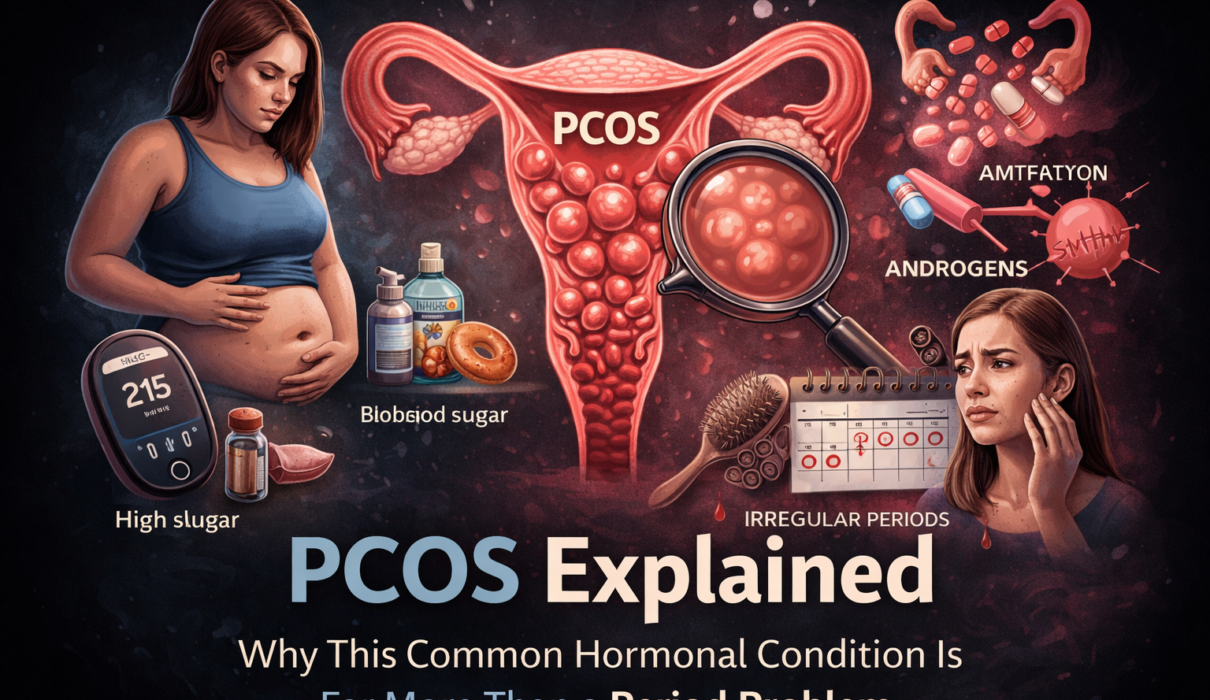
You’re not alone in that experience. Polycystic ovary syndrome is one of the most common hormonal conditions in the world – affecting an estimated 1 in 10 women of reproductive age in the United States – and it is also one of the most misunderstood (CDC, 2023). Most people think of it as a fertility problem or a period problem. In reality, PCOS is a complex hormonal and metabolic condition that affects far more than the reproductive system. It influences insulin function, cardiovascular risk, mental health, skin, hair, sleep, and long-term metabolic health in ways that deserve a complete, honest explanation.
This article is the foundation of our PCOS series. It covers what PCOS actually is, what causes it, what it feels like to live with it, how it’s diagnosed, and what the evidence says about managing it well.
What PCOS Actually Is – and What It Isn’t
Let’s start with the name, because it’s genuinely misleading.
Polycystic ovary syndrome suggests that the defining feature is cysts on the ovaries. It isn’t. Many women with PCOS don’t have ovarian cysts at all. And many women who do have ovarian cysts don’t have PCOS. The “polycystic” part of the name refers to a pattern seen on ultrasound – multiple small follicles in the ovaries that haven’t fully matured and released an egg – which is a consequence of the hormonal disruption, not the cause of it.
PCOS is fundamentally a hormonal and metabolic condition characterized by three core features – and you only need two of the three to receive a diagnosis:
- Irregular or absent ovulation – leading to irregular, infrequent, or absent menstrual periods
- Elevated androgens – higher than normal levels of male hormones like testosterone, either measured in blood or visible through symptoms like acne, excess facial or body hair, and hair thinning
- Polycystic ovaries on ultrasound – the follicle pattern described above
This is known as the Rotterdam criteria, established by an international consensus of experts and widely used in American clinical practice (Rotterdam ESHRE/ASRM-Sponsored PCOS Consensus Workshop Group, 2004).
“PCOS is not defined by cysts on the ovaries. It is defined by a pattern of hormonal and metabolic disruption – and no two women with PCOS have exactly the same experience of it.”
How Common Is PCOS?
More common than most people realize – and significantly underdiagnosed.
An estimated 6 to 12 percent of American women of reproductive age have PCOS, making it the most common hormonal disorder in this age group (CDC, 2023). That translates to approximately 5 million women in the United States alone. Globally, an estimated 8 to 13 percent of women of reproductive age are affected (WHO, 2023).
Despite this prevalence, the average time from the onset of symptoms to a PCOS diagnosis is over two years in the United States – and many women are told their irregular periods are normal, their acne is just hormonal, or their weight gain is simply a matter of diet and exercise, without anyone connecting the dots to a diagnosable condition.
What Causes PCOS?
The honest answer is that the exact cause of PCOS is not fully understood. What is well-established is that it is not caused by any single thing – it develops from a complex interaction between genetic predisposition, hormonal disruption, and metabolic factors that reinforce each other in a cycle.
The Androgen Piece
In women with PCOS, the ovaries produce more androgens – male sex hormones, primarily testosterone – than they should. This excess androgen disrupts the normal follicle development process in the ovaries. Follicles begin to develop but don’t mature fully, ovulation doesn’t occur reliably, and the menstrual cycle becomes irregular.
Elevated androgens also drive many of the visible symptoms of PCOS – the acne, the excess hair growth on the face or body (hirsutism), and in some cases the thinning of hair on the scalp.
The Insulin Resistance Piece
Insulin resistance is present in an estimated 65 to 70 percent of women with PCOS – and this is arguably the most important metabolic feature of the condition (Diamanti-Kandarakis and Dunaif, 2012). It occurs regardless of body weight – lean women with PCOS have insulin resistance too, which is something that is frequently misunderstood.
When cells don’t respond normally to insulin, the pancreas compensates by producing more of it. Elevated insulin levels then stimulate the ovaries to produce even more androgens – which worsens the hormonal disruption. This creates a reinforcing cycle where insulin resistance and androgen excess feed each other.
The Genetic Piece
PCOS runs in families. Having a mother, sister, or aunt with PCOS significantly increases a woman’s risk of developing it herself. Researchers have identified multiple genetic variants associated with PCOS, though no single gene has been identified as the cause. The genetic predisposition interacts with environmental factors – including diet, activity levels, and stress – to determine whether and how severely the condition develops.
What PCOS Feels Like: The Full Symptom Picture
PCOS presents differently in different people. Some women have all of the classic features. Others have only one or two. And because the symptoms overlap with so many other conditions – thyroid disorders, stress, normal hormonal variation – it often takes years to get to the right diagnosis.
Menstrual irregularities:
- Periods that come every 35 days or more (oligomenorrhea)
- Periods that have stopped entirely (amenorrhea)
- Unpredictable cycle lengths that change from month to month
- Periods that are very heavy when they do occur
Androgen-related symptoms:
- Acne – particularly along the jawline, chin, and neck
- Hirsutism – excess hair growth on the face, chest, abdomen, or back
- Male-pattern hair thinning or loss on the scalp (androgenic alopecia)
- Oily skin
Metabolic symptoms:
- Weight gain – particularly around the abdomen
- Difficulty losing weight despite diet and exercise changes
- Energy fluctuations, fatigue, and brain fog related to insulin resistance
- Acanthosis nigricans – darkening of the skin in folds and creases, a sign of insulin resistance
Reproductive symptoms:
- Difficulty conceiving due to irregular or absent ovulation
- Recurrent early miscarriage in some women
Mental health symptoms:
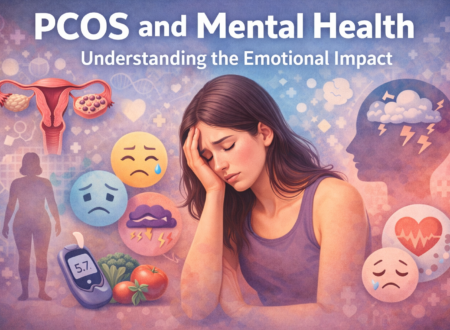
- Higher rates of depression and anxiety compared to women without PCOS
- Body image concerns related to visible symptoms like acne and hair changes
- The psychological weight of a chronic condition that affects appearance, fertility, and metabolic health simultaneously
It’s worth stating clearly: you don’t need to have all of these symptoms to have PCOS. Some women have primarily menstrual irregularity. Others have primarily androgen symptoms with relatively regular periods. The spectrum is wide.
PCOS Beyond the Reproductive System
This is where most PCOS conversations stop short – and where the most important long-term health implications live.
PCOS is not just a reproductive condition. It is a metabolic condition that increases the risk of several serious health concerns over the long term.
| Long-term health risk | What the evidence shows |
|---|---|
| Type 2 diabetes | Women with PCOS have 4 to 8 times the risk of developing type 2 diabetes compared to women without PCOS |
| Metabolic syndrome | Affects approximately 33 to 47 percent of women with PCOS |
| Cardiovascular disease | Higher rates of hypertension, dyslipidemia, and cardiovascular risk factors |
| Endometrial cancer | Chronic anovulation (lack of ovulation) leads to unopposed estrogen exposure, increasing endometrial cancer risk |
| Obstructive sleep apnea | Significantly more common in women with PCOS, particularly those with obesity |
| Depression and anxiety | Women with PCOS have significantly higher rates of both compared to the general population |
None of this is meant to alarm. These are risks – not certainties. And many of them are significantly modifiable through the same lifestyle and medical interventions used to manage PCOS itself. But understanding them changes how PCOS should be monitored and managed – which is why it matters.
“PCOS is not just a fertility problem. It is a lifelong metabolic condition that influences cardiovascular risk, blood sugar, mental health, and sleep – and managing it well means paying attention to all of these dimensions, not just periods and ovulation.”
How PCOS Is Diagnosed in the United States
There is no single test that diagnoses PCOS. Diagnosis is based on a combination of findings, using the Rotterdam criteria described earlier – two of the three core features must be present, and other conditions that can mimic PCOS must be ruled out.
What a diagnostic evaluation typically includes:
- Detailed medical history – menstrual pattern, symptom history, family history
- Physical examination – signs of androgen excess, body weight and distribution, skin findings
- Blood tests:
- Total and free testosterone
- LH (luteinizing hormone) and FSH (follicle-stimulating hormone)
- Fasting glucose and insulin – to assess insulin resistance
- Thyroid function tests – to rule out hypothyroidism, which can mimic PCOS
- Prolactin – to rule out hyperprolactinemia
- DHEA-S – another androgen from the adrenal glands
- Lipid panel – to assess cardiovascular risk
- Pelvic ultrasound – to assess ovarian morphology (not required for diagnosis but often performed)
Conditions that must be ruled out before diagnosing PCOS:
- Hypothyroidism
- Hyperprolactinemia
- Congenital adrenal hyperplasia
- Cushing’s syndrome (rare)
- Androgen-secreting tumors (rare)
This is why self-diagnosis based on symptoms alone is insufficient – and why a thorough evaluation by a physician, ideally an OB-GYN or endocrinologist with experience in PCOS, produces the most accurate and useful diagnosis.
Managing PCOS: The Evidence-Based Approach
PCOS is a lifelong condition – it doesn’t disappear after menopause, though its presentation changes. The goal of management is not to cure it but to reduce symptoms, address metabolic risks, support reproductive goals, and maintain long-term health.
Management is always individualized. What’s right depends on a woman’s specific symptom profile, her reproductive goals, her metabolic health, and her personal preferences.
Lifestyle as Medicine
Lifestyle modification is the most consistently evidence-based intervention for PCOS – and it produces benefits across virtually every dimension of the condition.
Exercise: Regular physical activity – particularly a combination of aerobic exercise and strength training – improves insulin sensitivity, reduces androgen levels, supports weight management, and improves mood in women with PCOS. Even modest amounts of exercise produce measurable hormonal improvements.
Diet: No single PCOS diet is universally superior, but dietary patterns that reduce insulin spikes and support stable blood sugar consistently show benefit. These include:
- Lower glycemic index carbohydrates
- Adequate protein at each meal
- Anti-inflammatory foods – vegetables, fruits, fatty fish, olive oil
- Limiting ultra-processed foods and added sugars
The Mediterranean dietary pattern has the strongest evidence base for PCOS among specific dietary approaches (Barrea et al., 2021).
Weight management: In women with PCOS who are overweight, even modest weight loss – as little as 5 to 10 percent of body weight – can meaningfully restore ovulation, reduce androgen levels, and improve insulin sensitivity. But it’s important to be clear: weight is not a prerequisite for PCOS, and lean women with PCOS benefit from the same lifestyle approaches.
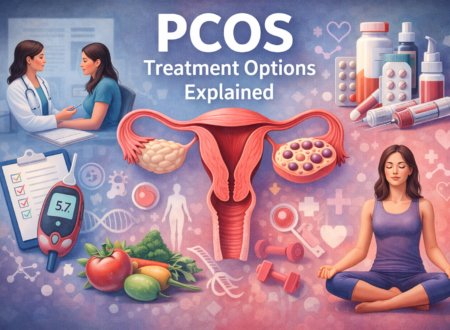
Medical Treatment Options
Combined oral contraceptive pill: The most commonly prescribed medical treatment for PCOS in women who are not trying to conceive. It regulates menstrual cycles, reduces androgen levels (improving acne and hirsutism), and provides endometrial protection against the effects of chronic anovulation. It does not treat the underlying metabolic features of PCOS.
Metformin: An insulin-sensitizing medication widely used in type 2 diabetes that has significant evidence for PCOS management. It improves insulin resistance, can help restore ovulation, and reduces long-term metabolic risk. It is used in PCOS both to manage metabolic features and to support fertility.
Spironolactone: An anti-androgen medication used to address hirsutism, acne, and scalp hair loss in PCOS. It blocks androgen receptors and reduces the visible symptoms of androgen excess. It cannot be used during pregnancy.
Clomiphene and letrozole: Ovulation induction medications used when fertility is the primary goal. Letrozole has become the preferred first-line agent for ovulation induction in PCOS in American clinical practice, having shown superior live birth rates compared to clomiphene in clinical trials (Legro et al., 2014).
Inositol: A supplement – specifically myo-inositol and D-chiro-inositol – with a growing evidence base for improving insulin sensitivity, ovarian function, and hormonal parameters in PCOS. While not FDA-approved specifically for PCOS, it is widely used and has a favorable safety profile.
| Goal | Evidence-based approaches |
|---|---|
| Regulate menstrual cycles | Combined oral contraceptive pill; lifestyle modification; metformin |
| Reduce acne and excess hair | Combined oral contraceptive pill; spironolactone; lifestyle modification |
| Improve insulin resistance | Lifestyle modification; metformin; inositol |
| Support fertility | Letrozole; clomiphene; metformin; lifestyle modification |
| Reduce cardiovascular risk | Lifestyle modification; metformin; lipid management if needed |
| Support mental health | Psychological support; treatment of underlying hormonal features; exercise |
Frequently Asked Questions
Q: Does having PCOS mean I can’t get pregnant?
No. PCOS affects ovulation, which makes conception more challenging for some women – but it does not mean infertility. Many women with PCOS conceive naturally, particularly with lifestyle optimization. For those who need support, effective fertility treatments including letrozole and other ovulation induction approaches have high success rates. PCOS is the most common cause of anovulatory infertility in the US, and it is also one of the most treatable.
Q: I’m not overweight. Can I still have PCOS?
Yes, absolutely. Approximately 20 to 30 percent of women with PCOS are lean (Yildiz et al., 2012). Lean PCOS is real, often underdiagnosed because providers sometimes dismiss PCOS in the absence of obesity, and carries its own metabolic risks including insulin resistance. Body weight is not a diagnostic criterion for PCOS.
Q: Will PCOS go away after menopause?
PCOS doesn’t disappear at menopause – the underlying metabolic features, including insulin resistance and cardiovascular risk, persist. What typically changes is that menstrual irregularity becomes less relevant, and androgen levels may moderate somewhat with age. Long-term metabolic monitoring remains important after menopause in women with PCOS.
Q: Is the pill the only treatment for PCOS?
No. The combined oral contraceptive pill is the most commonly prescribed treatment for managing symptoms in women not trying to conceive, but it is not the only option and does not treat the underlying metabolic features of PCOS. Metformin, spironolactone, inositol, and lifestyle modification all have evidence for different aspects of PCOS management. The right combination depends on your specific symptoms and goals.
Q: Can diet alone manage PCOS?
For some women with mild PCOS, particularly those in whom insulin resistance is a primary driver, meaningful dietary changes can produce significant improvements in symptoms, hormonal parameters, and metabolic markers. For others, particularly those with more severe androgen excess or significant menstrual irregularity, lifestyle changes alone may be insufficient and medical treatment is needed alongside them. Diet is a foundation, not a complete substitute for medical care.
Q: Does PCOS increase cancer risk?
Chronic anovulation – the absence of regular ovulation – leads to prolonged exposure of the uterine lining to estrogen without the counterbalancing effect of progesterone. This increases the risk of endometrial hyperplasia and endometrial cancer over time. This is one of the reasons why ensuring regular shedding of the uterine lining – either through natural periods, the pill, or progesterone supplementation – is an important part of PCOS management.
Disclamier: This article is for educational purposes only and does not constitute medical advice. Always consult a qualified healthcare professional for personal health concerns.
References
Centers for Disease Control and Prevention (CDC). Polycystic Ovary Syndrome (PCOS). 2023. https://www.cdc.gov/diabetes/basics/pcos.html
World Health Organization (WHO). Polycystic Ovary Syndrome. 2023. https://www.who.int/news-room/fact-sheets/detail/polycystic-ovary-syndrome
Rotterdam ESHRE/ASRM-Sponsored PCOS Consensus Workshop Group. Revised 2003 consensus on diagnostic criteria and long-term health risks related to polycystic ovary syndrome. Fertil Steril. 2004;81(1):19-25. https://pubmed.ncbi.nlm.nih.gov/14711538
Diamanti-Kandarakis E, Dunaif A. Insulin resistance and the polycystic ovary syndrome revisited: an update on mechanisms and implications. Endocr Rev. 2012;33(6):981-1030. https://pubmed.ncbi.nlm.nih.gov/23065822
Legro RS, Brzyski RG, Diamond MP, et al. Letrozole versus clomiphene for infertility in the polycystic ovary syndrome. N Engl J Med. 2014;371(2):119-129. https://pubmed.ncbi.nlm.nih.gov/25006718
Barrea L, Marzullo P, Muscogiuri G, et al. Source and amount of carbohydrate in the diet and inflammation in women with polycystic ovary syndrome. Nutr Res Rev. 2021;34(1):1-12. https://pubmed.ncbi.nlm.nih.gov/31937382
Yildiz BO, Bozdag G, Yapici Z, Esinler I, Yarali H. Prevalence, phenotype and cardiometabolic risk of polycystic ovary syndrome under different diagnostic criteria. Hum Reprod. 2012;27(10):3067-3073. https://pubmed.ncbi.nlm.nih.gov/22777527
Endocrine Society. Polycystic Ovary Syndrome Clinical Practice Guideline. 2023. https://www.endocrine.org/clinical-practice-guidelines/polycystic-ovary-syndrome
9 Comments