

 By
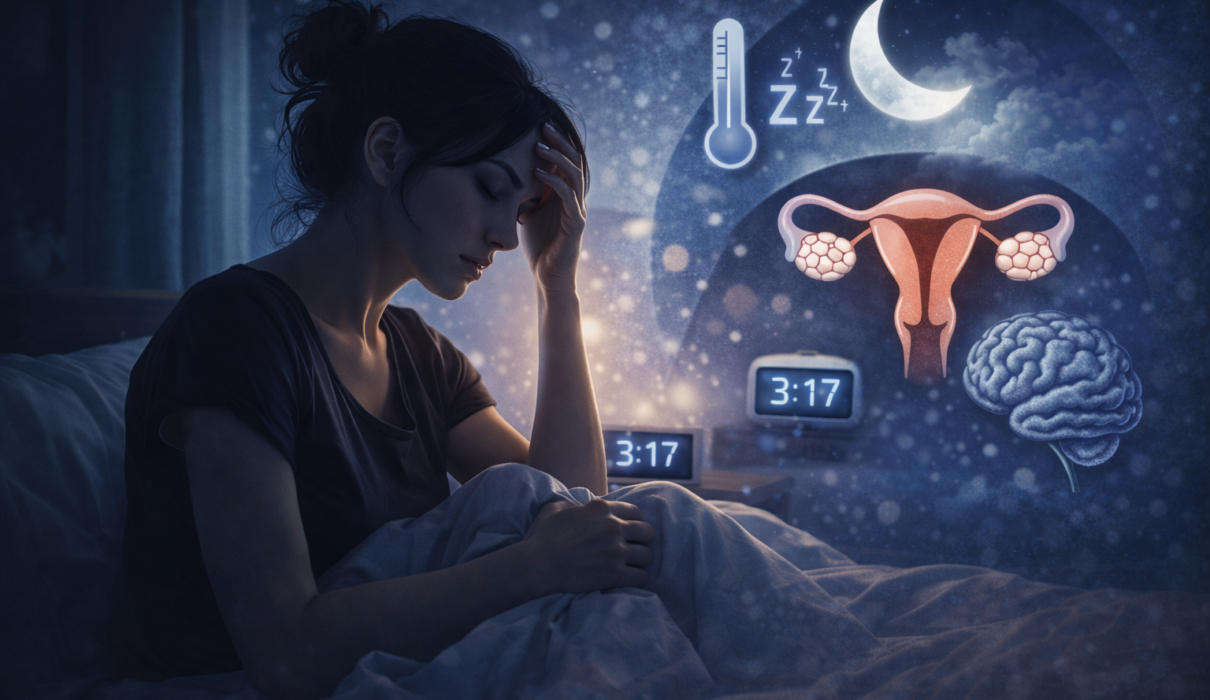
By If you have PCOS and you’re tired all the time – not just occasionally tired, but the kind of exhausted that doesn’t fully resolve after a full night of sleep – you’re not imagining it and you’re not alone.
Sleep problems are one of the most consistently reported but least discussed experiences among women with PCOS. They show up in surveys, in clinical studies, and in virtually every online PCOS community in a way that makes clear this is not an occasional coincidence. Women with PCOS sleep worse than women without it – and the reasons are specific, biological, and directly connected to the hormonal and metabolic features of the condition.
Understanding why sleep is disrupted in PCOS changes how you approach the problem. It is not just a matter of better sleep hygiene or going to bed earlier. In some cases there is an underlying disorder – obstructive sleep apnea – that requires medical evaluation and treatment. In others the issue is hormonal and metabolic, responsive to the same interventions that improve PCOS overall. And in many cases it is both, interacting with and reinforcing each other in a cycle that makes both the PCOS and the sleep worse simultaneously.
This article is part of our PCOS series. For the full overview of the condition, visit our PCOS Explained guide.
How Common Are Sleep Problems in PCOS?
The numbers are striking enough to warrant leading with them.
Women with PCOS have obstructive sleep apnea at rates approximately 5 to 30 times higher than age-matched women without PCOS – depending on the study population and how sleep apnea is defined and measured (Vgontzas et al., 2001). An estimated 30 to 50 percent of women with PCOS have clinically significant sleep-disordered breathing, compared to approximately 5 to 7 percent of the general female population (Tasali et al., 2008).
Beyond sleep apnea, women with PCOS report significantly higher rates of:
- Insomnia and difficulty falling or staying asleep
- Non-restorative sleep – sleeping for what should be adequate hours but waking unrefreshed
- Excessive daytime sleepiness
- Disrupted sleep quality even without a formal sleep disorder diagnosis
These are not minor inconveniences. Poor sleep has cascading effects on insulin sensitivity, cortisol, appetite regulation, mood, and energy – all of which directly affect the metabolic and hormonal features of PCOS. Sleep is not a passive background activity. In PCOS, it is an active part of the metabolic picture.
“Women with PCOS experience obstructive sleep apnea at rates up to 30 times higher than age-matched women without the condition. Sleep problems in PCOS are not incidental – they are biologically driven and have direct consequences for hormonal balance and metabolic health.”
The Main Sleep Disorders in PCOS
Obstructive Sleep Apnea
Obstructive sleep apnea (OSA) is the most clinically significant sleep disorder in PCOS and the most underdiagnosed. It occurs when the muscles of the throat relax during sleep, partially or fully blocking the airway. Breathing repeatedly stops and starts throughout the night – sometimes hundreds of times – disrupting sleep architecture even when the person is not fully aware of waking.
OSA in women with PCOS is driven by several mechanisms:
- Androgen excess – elevated testosterone affects upper airway muscle tone and structure in ways that increase susceptibility to airway collapse during sleep. This is why men – who have much higher testosterone than women – have much higher rates of sleep apnea in the general population. In women with PCOS, the elevated androgens create a similar vulnerability.
- Obesity and central adiposity – excess fat around the neck and throat narrows the airway. Women with PCOS have higher rates of central adiposity, which directly increases OSA risk.
- Insulin resistance – independently associated with sleep apnea through mechanisms including autonomic nervous system dysregulation and inflammatory effects on airway tissue.
Symptoms of OSA that women with PCOS should know:
- Loud snoring, gasping, or choking sounds during sleep (often reported by a partner)
- Waking with a headache, dry mouth, or sore throat
- Excessive daytime sleepiness – falling asleep in meetings, while watching TV, or during low-stimulation activities
- Difficulty concentrating and memory problems
- Unrefreshing sleep despite adequate hours
- Waking repeatedly through the night
OSA in women is frequently underdiagnosed because it often presents more subtly than the classic male presentation – snoring may be quieter, daytime sleepiness may be attributed to depression or stress, and the condition is not always on the radar of providers who associate it primarily with overweight middle-aged men.
If you have PCOS and recognize these symptoms, a sleep study – either in a sleep lab or via a home sleep test – is the appropriate next step.
Insomnia
Beyond sleep apnea, many women with PCOS experience insomnia – difficulty falling asleep, staying asleep, or both – that is not explained by a breathing disorder. Several PCOS-specific factors contribute:
- Cortisol dysregulation – some women with PCOS have abnormal cortisol patterns, including elevated evening cortisol that should be low at night. This interferes with the melatonin rise that signals the body it’s time to sleep.
- Anxiety and depression – both significantly more prevalent in PCOS – are among the most common drivers of insomnia in the general population. The higher rates in PCOS directly translate to higher rates of sleep difficulty.
- Irregular menstrual cycles – the hormonal fluctuations associated with irregular or absent cycles can disrupt the normal cyclic changes in body temperature and progesterone that support sleep quality in the second half of a regular cycle.
Restless Legs Syndrome
Restless legs syndrome – the urge to move the legs at night, often accompanied by uncomfortable sensations – is reported at higher rates in women with PCOS than in the general population, though the evidence base is less developed than for OSA. Its presence should prompt discussion with a healthcare provider.
Why Poor Sleep Makes PCOS Worse
This is the part that transforms sleep from a quality-of-life concern into a clinically urgent one for women with PCOS: poor sleep directly worsens the metabolic and hormonal features of PCOS through specific, well-characterized mechanisms.
Sleep Deprivation Worsens Insulin Resistance
Even short-term sleep restriction – reducing sleep from 8 hours to 5 hours for a week – produces measurable reductions in insulin sensitivity in healthy adults (Spiegel et al., 1999). In women with PCOS who already have insulin resistance, chronic poor sleep compounds an already significant metabolic problem. The insulin-androgen cycle that drives PCOS gets worse when insulin sensitivity declines further.
Sleep Loss Disrupts Appetite Hormones
Poor sleep reduces leptin (the satiety hormone) and elevates ghrelin (the hunger hormone) – producing stronger hunger signals and weaker fullness signals. Women with PCOS already have disrupted appetite signaling. Sleep deprivation amplifies this disruption, making it harder to eat in ways that support metabolic health and easier to overeat, particularly high-carbohydrate foods.
Poor Sleep Elevates Cortisol
Sleep deprivation elevates cortisol – the primary stress hormone. Elevated cortisol worsens insulin resistance, promotes central fat storage, and suppresses the reproductive hormones that regulate ovulation. This directly worsens the hormonal features of PCOS.
The Bidirectional Cycle
The relationship between sleep and PCOS runs in both directions – forming a cycle that can sustain and worsen both sides simultaneously:
| PCOS feature | Effect on sleep | Sleep problem | Effect on PCOS |
|---|---|---|---|
| Elevated androgens | Increases OSA risk | OSA / fragmented sleep | Worsens insulin resistance |
| Insulin resistance | Promotes OSA; disrupts sleep architecture | Poor sleep quality | Further worsens insulin resistance |
| Elevated cortisol | Delays sleep onset; disrupts sleep depth | Sleep deprivation | Elevates cortisol further |
| Anxiety and depression | Insomnia; non-restorative sleep | Poor sleep quality | Worsens mood and hormonal balance |
| Irregular cycles | Hormonal fluctuations disrupt sleep | Sleep fragmentation | Further disrupts hormonal regulation |
“Poor sleep doesn’t just make PCOS symptoms feel worse – it actively worsens insulin resistance, cortisol, appetite regulation, and hormonal balance through specific biological mechanisms. Treating sleep problems in PCOS is treating PCOS.”
What Treating Sleep Apnea Does for PCOS
This is underappreciated and important: treating obstructive sleep apnea in women with PCOS produces metabolic improvements that go beyond better sleep.
Studies have shown that CPAP therapy for OSA in women with PCOS improves:
- Insulin sensitivity – independent of weight change
- Blood pressure – a key cardiovascular risk factor in PCOS
- Inflammatory markers – including CRP
- Daytime cortisol levels
- Quality of life and daytime functioning
This means that for women with PCOS and OSA, treating the sleep apnea is not just about sleeping better. It is a meaningful metabolic intervention that should be considered part of comprehensive PCOS management.
Practical Approaches to Improving Sleep With PCOS
If You Suspect Sleep Apnea
Do not wait for symptoms to become severe before seeking evaluation. The threshold for pursuing a sleep study should be low in women with PCOS – particularly those with:
- Obesity or significant central adiposity
- Difficult-to-control insulin resistance despite lifestyle changes
- Excessive daytime sleepiness
- Any report from a partner of snoring, gasping, or breathing pauses
A sleep study can be done in a sleep lab (polysomnography) or at home with a portable sleep testing device. Your primary care physician or a sleep specialist can order this. In the US, sleep studies for OSA are covered by most insurance plans when clinically indicated.
Treatment for OSA:
- CPAP therapy (continuous positive airway pressure) – the most effective treatment; a machine delivers gentle pressurized air through a mask to keep the airway open during sleep
- Oral appliances – dental devices that reposition the jaw to keep the airway open; effective for mild to moderate OSA
- Weight loss – reduces the anatomical contribution to airway narrowing; meaningful but typically not sufficient alone for significant OSA
- Positional therapy – for OSA that is primarily positional (occurring mainly on the back)
- Surgery – in specific anatomical cases where structural airway issues are the primary driver
For General Sleep Quality in PCOS
Address the insulin resistance. Because insulin resistance is a driver of sleep disruption in PCOS, improving it through diet, exercise, and if appropriate metformin or inositol – improves sleep quality as a secondary benefit. This is one of the ways that addressing the core metabolic features of PCOS pays dividends across multiple symptoms simultaneously.
Stabilize blood sugar before bed. Blood sugar fluctuations at night can disrupt sleep. A small protein-containing snack before bed – rather than a high-carbohydrate snack – helps maintain stable blood sugar through the night for some women with PCOS.
Consistent sleep and wake times. Circadian rhythm stability is important for cortisol regulation. Going to bed and waking at consistent times – even on weekends – helps regulate the cortisol and melatonin patterns that support sleep onset and quality.
Manage evening stress and cortisol. Activities that reduce evening sympathetic nervous system activation – gentle exercise, meditation, limiting news and social media, reducing bright light exposure in the hour before bed – support the cortisol drop that is necessary for sleep onset.
Exercise – but not too late. Regular exercise significantly improves sleep quality, reduces OSA severity, and improves insulin sensitivity. Vigorous exercise close to bedtime can temporarily elevate cortisol and make sleep onset harder – earlier in the day is preferable for women who notice this effect.
Address anxiety and depression directly. If anxiety or depression is contributing to sleep problems, treating those conditions – through therapy, medication, or both – is more effective than sleep hygiene alone. Cognitive behavioral therapy for insomnia (CBT-I) has the strongest evidence base of any insomnia treatment and is more effective than sleep medication for chronic insomnia.
Frequently Asked Questions
Q: I sleep 8 hours every night but still wake up exhausted. Could this be PCOS-related?
Yes – this is a classic description of non-restorative sleep, which is extremely common in women with PCOS. If you’re sleeping adequate hours but consistently waking unrefreshed, the quality of your sleep rather than the quantity is the issue. OSA is a very common cause – you can sleep 8 hours and have your sleep fragmented hundreds of times by breathing events you’re not fully aware of. Excessive daytime sleepiness despite adequate sleep hours is a strong indicator to pursue a sleep study.
Q: Can treating my PCOS improve my sleep?
Yes. Improving the metabolic features of PCOS – through lifestyle changes, metformin, weight loss if indicated – often improves sleep quality as a secondary benefit. Reducing androgen levels, improving insulin sensitivity, and reducing central adiposity all reduce OSA risk and improve sleep architecture. This is one of the most compelling reasons to address PCOS metabolically rather than just symptomatically.
Q: I’m lean and have PCOS. Can I still have sleep apnea?
Yes. While obesity significantly increases OSA risk in PCOS, lean women with PCOS also have higher rates of OSA than lean women without it – driven by the androgen excess and insulin resistance that are present regardless of weight. Don’t rule out OSA based on body weight alone if you have symptoms.
Q: Is melatonin safe to take for sleep with PCOS?
Melatonin is generally safe for short-term use and has a reasonable evidence base for improving sleep onset. There is also some early research suggesting melatonin may have modest beneficial effects on ovarian function and oocyte quality in PCOS – though this is not a primary indication and the evidence is preliminary. It is not a substitute for addressing the underlying drivers of poor sleep in PCOS. Standard doses of 0.5 to 3mg are generally more effective than the higher doses commonly available in US supplements.
Q: My doctor has never mentioned sleep problems in relation to my PCOS. Should I bring it up?
Absolutely. Sleep disturbances – particularly OSA – are significantly underscreened in women with PCOS in standard clinical practice. If you are experiencing excessive daytime sleepiness, non-restorative sleep, or any of the symptoms of OSA, raising this directly with your provider and asking specifically about a sleep study is entirely appropriate. You can say directly: “I’ve read that women with PCOS have much higher rates of sleep apnea and I’d like to be evaluated.”
Disclaimer: This article is for educational purposes only and does not constitute medical advice. Always consult a qualified healthcare professional for personal health concerns.
References
Vgontzas AN, Legro RS, Bixler EO, Grayev A, Kales A, Chrousos GP. Polycystic ovary syndrome is associated with obstructive sleep apnea and daytime sleepiness: role of insulin resistance. J Clin Endocrinol Metab. 2001;86(2):517-520. https://pubmed.ncbi.nlm.nih.gov/11158005
Tasali E, Van Cauter E, Ehrmann DA. Polycystic ovary syndrome and obstructive sleep apnea. Sleep Med Clin. 2008;3(1):37-46. https://pubmed.ncbi.nlm.nih.gov/18516250
Spiegel K, Leproult R, Van Cauter E. Impact of sleep debt on metabolic and endocrine function. Lancet. 1999;354(9188):1435-1439. https://pubmed.ncbi.nlm.nih.gov/10543671
Moran LJ, March WA, Whitrow MJ, Pitcher JB, Davies MJ, Moore VM. Sleep disturbances in a community-based sample of women with polycystic ovary syndrome. Hum Reprod. 2015;30(2):466-472. https://pubmed.ncbi.nlm.nih.gov/25567621
Helvaci N, Karabulut E, Demir AU, Yildiz BO. Polycystic ovary syndrome and the risk of obstructive sleep apnea: a meta-analysis and review of the literature. Endocr Connect. 2017;6(7):437-445. https://pubmed.ncbi.nlm.nih.gov/28733469
Teede HJ, Misso ML, Costello MF, et al. Recommendations from the international evidence-based guideline for the assessment and management of polycystic ovary syndrome. Hum Reprod. 2018;33(9):1602-1618. https://pubmed.ncbi.nlm.nih.gov/30052961
American Academy of Sleep Medicine. Clinical Practice Guideline for Diagnostic Testing for Adult Obstructive Sleep Apnea. 2017. https://aasm.org/resources/clinicalguidelines/diagnostic-testing-for-adult-osa.pdf


1 Comment