

 By
By Diabetes affects approximately 38 million Americans – roughly 1 in 10 people – and another 98 million have prediabetes, most without knowing it (CDC, 2024). It is one of the most talked-about health conditions in the country, yet one of the most persistently misunderstood.
The misunderstandings are not trivial. They delay diagnosis. They generate shame that prevents people from seeking treatment. They lead to poor management decisions based on oversimplified ideas about sugar, weight, and willpower. And they obscure the real story – which is that diabetes is a complex metabolic condition with specific, well-understood biology, and that the biology is genuinely worth understanding because it changes how you think about prevention, management, and long-term health.
This article explains what diabetes actually is – from the cellular level up – what the different types mean, how it’s diagnosed, what happens if it goes unmanaged, and what the evidence says about managing it well.
What Diabetes Actually Is
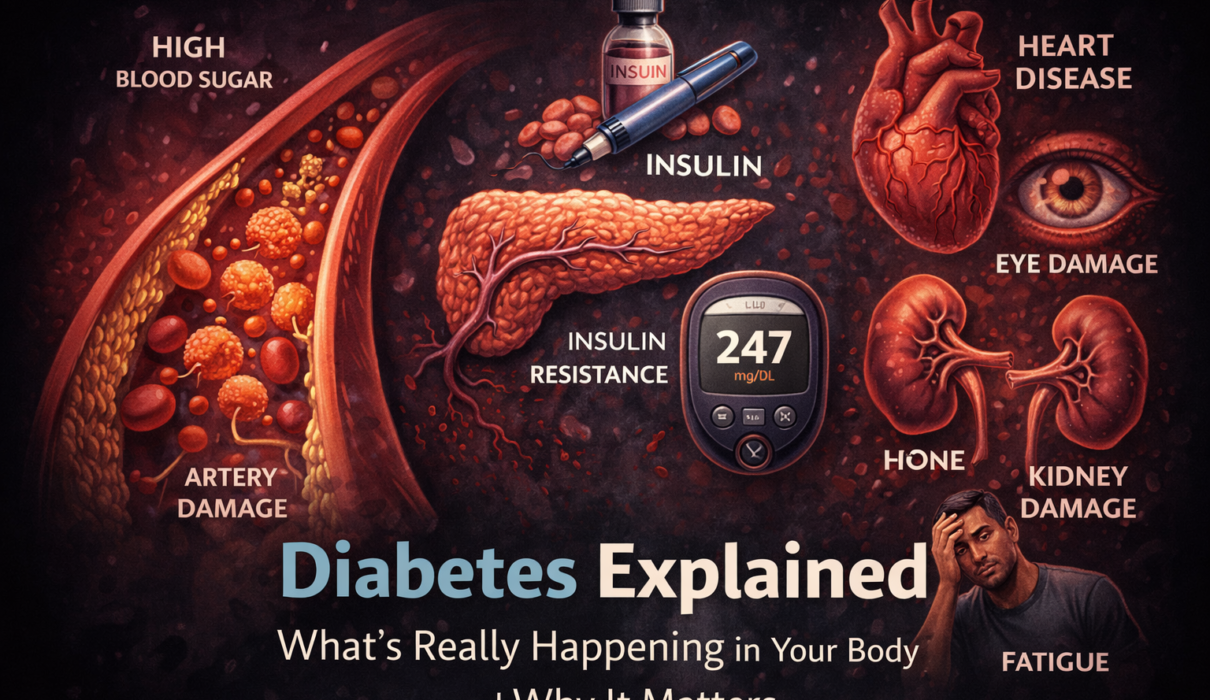
At its core, diabetes is a condition in which the body cannot properly regulate the level of glucose in the bloodstream. Not because glucose is inherently dangerous in normal amounts – it is the primary fuel source for every cell in the body. But because the system that should move glucose from the bloodstream into cells breaks down, leaving glucose to accumulate in the blood where it causes progressive damage to blood vessels, nerves, and organs.
That system depends on insulin.
Insulin is a hormone produced by beta cells in the pancreas. After you eat – particularly after eating carbohydrates – glucose enters the bloodstream. Insulin acts as a key, unlocking the doors of cells throughout the body so glucose can enter and be used for energy or stored. Without insulin doing its job properly, cells can’t access the glucose they need, and that glucose builds up in the bloodstream instead.
Diabetes occurs when this insulin system fails – either because the pancreas can no longer produce adequate insulin, or because the body’s cells have stopped responding normally to the insulin it does produce, or both.
“Diabetes is not simply about eating too much sugar. It is a failure of the system that moves glucose from the bloodstream into cells – a failure that, left unaddressed, quietly damages blood vessels, nerves, and organs throughout the body.”
The Different Types of Diabetes
Diabetes is not one condition. It is a group of related metabolic disorders that share the feature of chronically elevated blood glucose but differ significantly in their causes, mechanisms, and treatment requirements.
Type 1 Diabetes
Type 1 diabetes is an autoimmune condition in which the body’s immune system mistakenly attacks and destroys the beta cells in the pancreas that produce insulin. The result is near-total insulin deficiency – the pancreas produces little to no insulin at all.
Without insulin, glucose cannot enter cells. The body, starved of cellular fuel despite abundant blood glucose, begins breaking down fat and muscle for energy – producing ketones as a byproduct. In uncontrolled type 1 diabetes, this leads to diabetic ketoacidosis (DKA), a life-threatening emergency.
Key features of type 1 diabetes:
- Autoimmune destruction of beta cells
- Onset typically in childhood, adolescence, or young adulthood – though it can develop at any age
- Absolute insulin deficiency – insulin therapy is not optional, it is essential for survival
- Not caused by diet or lifestyle
- Accounts for approximately 5 to 10 percent of all diabetes cases in the US
People with type 1 diabetes manage their condition through insulin therapy – either multiple daily injections or a continuous insulin pump – combined with careful blood glucose monitoring and carbohydrate counting.
Type 2 Diabetes
Type 2 diabetes is the most common form – accounting for approximately 90 to 95 percent of all diabetes diagnoses in the United States (CDC, 2024). It develops through a different mechanism than type 1 and over a much longer timeframe.
In type 2 diabetes, the problem begins with insulin resistance – the body’s cells become less responsive to insulin’s signal. The pancreas compensates by producing more insulin to overcome the resistance. For years – sometimes decades – blood glucose levels may remain relatively normal because the pancreas is working hard enough to compensate. But this extra demand gradually exhausts the beta cells. Insulin production begins to decline. Eventually the pancreas can no longer produce enough insulin to overcome the resistance, and blood glucose levels rise persistently.
Key features of type 2 diabetes:
- Develops gradually – often over 10 to 15 years before diagnosis
- Strongly associated with insulin resistance, central obesity, physical inactivity, and metabolic syndrome
- Frequently asymptomatic in early stages – many people don’t know they have it
- Accounts for the vast majority of diabetes cases
- Significantly preventable and in some cases reversible with early, aggressive lifestyle intervention
Prediabetes
Prediabetes is the stage before type 2 diabetes – blood glucose levels are higher than normal but not yet high enough to meet the diagnostic criteria for diabetes. Approximately 98 million American adults have prediabetes, and an estimated 80 percent don’t know it (CDC, 2024).
Prediabetes is not a benign finding. It represents significant insulin resistance, an increased risk of cardiovascular disease, and – without intervention – a high probability of progressing to type 2 diabetes within 5 to 10 years. But it is also a genuine window of opportunity: lifestyle intervention at the prediabetes stage can prevent or significantly delay the progression to type 2 diabetes.
Gestational Diabetes
Gestational diabetes develops during pregnancy when hormones produced by the placenta increase insulin resistance to a degree that the pancreas cannot fully compensate for. It typically resolves after delivery but carries meaningful long-term implications – women with gestational diabetes have a 40 to 60 percent lifetime risk of developing type 2 diabetes (ADA, 2023). Their children also have a higher risk of obesity and metabolic disorders.
Other Types
Less common forms include monogenic diabetes (caused by single gene mutations), secondary diabetes (caused by other conditions such as chronic pancreatitis or Cushing’s syndrome), and LADA (latent autoimmune diabetes in adults) – a slowly progressive form of autoimmune diabetes that resembles type 2 in its early presentation.
How Diabetes Develops in Type 2: The Full Timeline
Understanding how type 2 diabetes develops over time is one of the most important pieces of context for understanding why early detection and prevention matter so much.
| Stage | What’s happening | Blood sugar | Typical duration |
|---|---|---|---|
| Normal insulin sensitivity | Cells respond normally to insulin; glucose regulated efficiently | Normal | Years to decades |
| Early insulin resistance | Cells start responding less efficiently; pancreas compensates with more insulin | Normal (but insulin elevated) | 5-15 years |
| Prediabetes | Compensation insufficient; blood sugar begins rising above normal | Elevated but below diabetes threshold | 5-10 years |
| Early type 2 diabetes | Beta cell function significantly reduced; persistent hyperglycemia | Above diabetes threshold | Diagnosis point |
| Established type 2 diabetes | Progressive beta cell decline; increasing medication requirements | Elevated; managed with treatment | Ongoing |
The critical insight here is that by the time most people are diagnosed with type 2 diabetes, the underlying metabolic dysfunction has been developing for well over a decade. And during most of that time there were no obvious symptoms – which is exactly why routine screening matters so much.
Symptoms: What Diabetes Feels Like
Many people with type 2 diabetes have no symptoms at all for years. The condition is found on routine blood testing in people who felt entirely normal. This is one of the most important and most underappreciated facts about diabetes – you cannot rely on symptoms to tell you whether your blood glucose is in a dangerous range.
When symptoms do occur, they reflect the physiological consequences of chronically elevated blood glucose:
The classic symptoms:
- Increased thirst (polydipsia) – the kidneys are working hard to excrete excess glucose, pulling water with it
- Frequent urination (polyuria) – a direct consequence of the above
- Fatigue – cells starved of glucose despite elevated blood levels
- Blurred vision – elevated glucose causes the lens of the eye to swell
- Slow healing of cuts and wounds – impaired immune function and blood vessel damage
- Frequent infections – elevated glucose provides a growth medium for bacteria and fungi
- Tingling or numbness in the hands or feet – early peripheral neuropathy
Type 1 specific: Symptoms typically develop more rapidly and dramatically – weight loss, excessive hunger, and DKA symptoms can develop within days to weeks of onset.
“Many people with type 2 diabetes have no symptoms for years. The condition is found on routine blood tests in people who felt completely well. Waiting for symptoms before getting tested is how diabetes goes undetected until complications have already developed.”
How Diabetes Is Diagnosed
Diabetes diagnosis is based on blood tests – not symptoms. The four tests used for diagnosis are:
| Test | What it measures | Prediabetes range | Diabetes threshold |
|---|---|---|---|
| Fasting plasma glucose | Blood glucose after 8-hour fast | 100-125 mg/dL | 126 mg/dL or higher |
| HbA1c | Average blood glucose over ~3 months | 5.7-6.4% | 6.5% or higher |
| Oral glucose tolerance test (OGTT) | Blood glucose 2 hours after 75g glucose drink | 140-199 mg/dL | 200 mg/dL or higher |
| Random plasma glucose | Blood glucose at any time with symptoms | – | 200 mg/dL or higher |
A single abnormal result, in the absence of symptoms, should be confirmed with a repeat test before diagnosis is made. HbA1c is the most commonly used test for both diagnosis and monitoring because it doesn’t require fasting and reflects longer-term glucose control rather than a single moment in time.
Who should be screened:
- All adults aged 35 to 70 who are overweight or obese – at least every 3 years
- Adults of any age with risk factors including family history, PCOS, hypertension, history of gestational diabetes, or prior prediabetes
- Pregnant women – screened for gestational diabetes between 24 and 28 weeks
Long-Term Complications: What Uncontrolled Diabetes Does to the Body
This is the part that makes diabetes genuinely serious. Persistently elevated blood glucose causes progressive damage to blood vessels and nerves throughout the body – damage that accumulates silently over years and eventually produces the complications that are responsible for most of the suffering and disability associated with diabetes.
Microvascular complications (damage to small blood vessels):
- Diabetic retinopathy – damage to the blood vessels of the retina; leading cause of blindness in American adults
- Diabetic nephropathy – kidney damage; leading cause of chronic kidney disease and dialysis in the US
- Diabetic neuropathy – nerve damage; causes pain, numbness, and tingling in the feet and hands; can lead to diabetic foot complications and amputation
Macrovascular complications (damage to large blood vessels):
- Cardiovascular disease – people with diabetes have 2 to 4 times the risk of heart disease and stroke compared to the general population
- Peripheral arterial disease – reduced blood flow to the limbs; major contributor to diabetic foot disease and amputation
- Stroke – significantly elevated risk
Other complications:
- Increased susceptibility to infections
- Dental disease
- Erectile dysfunction
- Non-alcoholic fatty liver disease
- Cognitive decline and increased dementia risk
The good news is that these complications are largely preventable with good glucose control. The landmark Diabetes Control and Complications Trial (DCCT) and UK Prospective Diabetes Study (UKPDS) established conclusively that tight glucose control dramatically reduces the risk of microvascular complications – by 25 to 76 percent depending on the complication (DCCT Research Group, 1993; UKPDS Group, 1998).
Management: What Actually Works
Lifestyle as the Foundation
Lifestyle modification is the most powerful tool available for diabetes management – and for type 2 diabetes specifically, aggressive lifestyle intervention at the right stage can achieve remission.
Diet: The evidence does not support a single “diabetes diet.” What the evidence supports is dietary patterns that improve blood glucose control, reduce cardiovascular risk, and support a healthy weight:
- Mediterranean dietary pattern – the most consistently evidence-supported pattern for type 2 diabetes
- Low glycemic index eating – carbohydrates that produce more gradual blood sugar rises
- Adequate protein – reduces post-meal glucose spikes and supports satiety
- Reduced ultra-processed foods and sugary drinks – the biggest drivers of blood sugar spikes and metabolic dysfunction
Exercise: Both aerobic exercise and resistance training improve insulin sensitivity and reduce blood glucose. Walking for 30 minutes after meals has been shown to reduce post-meal glucose spikes meaningfully. 150 minutes of moderate-intensity activity per week is the minimum evidence-based recommendation.
Weight management: For people with type 2 diabetes who are overweight, weight loss is one of the most powerful interventions available. The DiRECT trial demonstrated that significant weight loss – achieved through intensive dietary intervention – produced type 2 diabetes remission in nearly half of participants at 1 year (Lean et al., 2018).
Medications
When lifestyle changes are insufficient, several classes of medication are used for type 2 diabetes:
- Metformin – first-line medication; improves insulin sensitivity; reduces hepatic glucose production; well-tolerated; inexpensive
- GLP-1 receptor agonists (semaglutide/Ozempic, Wegovy, liraglutide/Victoza) – reduce blood glucose, promote weight loss, reduce cardiovascular events; increasingly used as early treatment
- SGLT2 inhibitors (empagliflozin/Jardiance, dapagliflozin/Farxiga) – reduce blood glucose through the kidneys; have cardiovascular and kidney protective effects independent of glucose lowering
- DPP-4 inhibitors (sitagliptin/Januvia) – moderate glucose lowering; well-tolerated
- Sulfonylureas – stimulate insulin release; inexpensive but risk of hypoglycemia and weight gain
- Insulin – used when other medications are insufficient; essential in type 1 diabetes; used as needed in type 2
For type 1 diabetes, insulin is non-negotiable. Modern options include rapid-acting, long-acting, and ultra-long-acting insulin formulations, as well as continuous glucose monitors (CGMs) and insulin pumps that have transformed type 1 management.
Monitoring
Regular monitoring is essential for tracking diabetes control and identifying complications early:
- HbA1c – every 3 months until stable, then every 6 months; target typically below 7% for most adults
- Blood pressure – at every visit; target below 130/80 mmHg
- Lipid panel – annually
- Kidney function (eGFR and urine albumin) – annually
- Foot examination – annually for neuropathy and vascular assessment
- Eye examination (dilated retinal exam) – annually
- Self-monitoring of blood glucose or continuous glucose monitoring – as recommended by provider
Can Diabetes Be Prevented or Reversed?
Type 1 diabetes cannot currently be prevented. Research into immunotherapy and beta cell preservation is ongoing but has not yet produced a clinical prevention strategy.
Type 2 diabetes is significantly preventable – and this is one of the most important public health messages about the condition. The landmark Diabetes Prevention Program (DPP) found that intensive lifestyle intervention reduced progression from prediabetes to type 2 diabetes by 58 percent – significantly more effective than metformin alone (Knowler et al., 2002). This translates to something genuinely actionable: identifying and intervening at the prediabetes stage produces real prevention.
Remission of type 2 diabetes – achieving blood glucose levels in the normal range without medication – is possible for some people, particularly those who are early in the course of the disease and who achieve significant weight loss. It is not a cure, and relapse is possible, but it is a realistic goal for motivated individuals with appropriate support.
Frequently Asked Questions
Q: Does eating sugar cause diabetes?
No – and this is one of the most persistent and damaging myths about diabetes. Type 1 diabetes is an autoimmune condition with no dietary cause. Type 2 diabetes develops from insulin resistance driven by a complex interaction of genetics, physical inactivity, central obesity, metabolic dysfunction, and dietary patterns overall – not sugar consumption specifically. Diets high in added sugars can contribute to weight gain and metabolic dysfunction, which are risk factors for type 2 diabetes. But the relationship is indirect and not unique to sugar.
Q: If I have type 2 diabetes, will I definitely need insulin eventually?
Not necessarily. Type 2 diabetes is progressive in many people – beta cell function declines over time, and medications that worked earlier may become insufficient. But this trajectory is not inevitable. Aggressive early management – particularly significant weight loss and intensive lifestyle change – can preserve beta cell function and in some cases produce remission. The course of type 2 diabetes is highly individual and depends significantly on how early and how thoroughly it is managed.
Q: What is the difference between type 1 and type 2 diabetes?
Type 1 is an autoimmune condition causing absolute insulin deficiency – the immune system destroys the insulin-producing cells. Type 2 is primarily a condition of insulin resistance – cells stop responding normally to insulin, and eventually the pancreas can’t compensate. Type 1 requires insulin for survival from diagnosis. Type 2 is managed with lifestyle changes and medications first, with insulin added if needed. Type 1 is not caused by lifestyle. Type 2 has significant lifestyle contributors but also strong genetic influences.
Q: My HbA1c is 5.9%. Should I be concerned?
Yes – 5.9% falls in the prediabetes range (5.7 to 6.4%). This is not a reason to panic but it is a genuine signal worth taking seriously. Prediabetes means significant insulin resistance is already present and the risk of progressing to type 2 diabetes is meaningfully elevated. It also means this is exactly the right time to intervene – through diet, exercise, and weight management if indicated – because lifestyle intervention at this stage has a proven, substantial effect on preventing or delaying progression to type 2 diabetes.
Q: Can type 2 diabetes go into remission?
Yes. Remission – defined as HbA1c below 6.5% for at least 3 months without diabetes medications – is achievable for some people with type 2 diabetes, particularly those who lose significant weight and make sustained lifestyle changes. The DiRECT trial showed remission in nearly half of participants at 1 year with intensive dietary intervention. Remission is more likely earlier in the course of the disease. It is not a cure – monitoring should continue and relapse is possible – but it is a realistic and meaningful goal.
Disclaimer: This article is for educational purposes only and does not constitute medical advice. Always consult a qualified healthcare professional for personal health concerns.
References
Centers for Disease Control and Prevention (CDC). National Diabetes Statistics Report. 2024. https://www.cdc.gov/diabetes/data/statistics-report/index.html
American Diabetes Association (ADA). Standards of Care in Diabetes. 2023. https://diabetesjournals.org/care/issue/46/Supplement_1
National Institute of Diabetes and Digestive and Kidney Diseases (NIDDK). Diabetes Overview. 2023. https://www.niddk.nih.gov/health-information/diabetes
Knowler WC, Barrett-Connor E, Fowler SE, et al. Reduction in the incidence of type 2 diabetes with lifestyle intervention or metformin. N Engl J Med. 2002;346(6):393-403. https://pubmed.ncbi.nlm.nih.gov/11832527
Lean MEJ, Leslie WS, Barnes AC, et al. Primary care-led weight management for remission of type 2 diabetes (DiRECT): an open-label, cluster-randomised trial. Lancet. 2018;391(10120):541-551. https://pubmed.ncbi.nlm.nih.gov/29221645
The Diabetes Control and Complications Trial Research Group. The effect of intensive treatment of diabetes on the development and progression of long-term complications. N Engl J Med. 1993;329(14):977-986. https://pubmed.ncbi.nlm.nih.gov/8366922
UK Prospective Diabetes Study (UKPDS) Group. Intensive blood-glucose control with sulphonylureas or insulin compared with conventional treatment and risk of complications in patients with type 2 diabetes. Lancet. 1998;352(9131):837-853. https://pubmed.ncbi.nlm.nih.gov/9742976
World Health Organization (WHO). Diabetes Fact Sheet. 2023. https://www.who.int/news-room/fact-sheets/detail/diabetes





12 Comments