

 By
By Everyone feels anxious sometimes. Before a job interview, before a difficult conversation, before a medical procedure you have been dreading. That tight feeling in your chest, the racing thoughts, the sense that something is about to go wrong — these are normal human experiences. Anxiety in these moments is not a disorder. It is your nervous system doing exactly what it was designed to do.
But for roughly 40 million American adults, anxiety is not occasional or situational. It is persistent, disproportionate, and disruptive enough to interfere with work, relationships, sleep, and daily functioning. It shows up when there is no obvious threat. It does not go away after the stressful situation passes. And it often feels completely outside of the person’s control, no matter how hard they try to reason their way through it (NIMH, 2023).
That is the difference between everyday anxiety and an anxiety disorder. And it is a distinction that matters enormously, both for understanding what is happening in the brain and body, and for knowing what kind of help is actually effective.
This article is the foundation of our anxiety series. It covers what anxiety disorders are, how they differ from normal anxiety, what causes them, how they are diagnosed in the United States, what the major types look like, and what the evidence says about treatment. Everything else in the series builds from here.
What Anxiety Actually Is
Before getting into disorders, it helps to understand what anxiety is at a biological level, because it is not a malfunction. It is a feature.
Anxiety is the body’s anticipatory response to perceived threat. When your brain detects something potentially dangerous, whether real or imagined, it activates the hypothalamic-pituitary-adrenal axis and the sympathetic nervous system. Stress hormones including adrenaline and cortisol flood the bloodstream. Heart rate increases. Breathing quickens. Muscles tense. Blood flow shifts away from digestion and toward the large muscle groups needed to fight or flee.
This is the fight-or-flight response, and for most of human history it was lifesaving. Facing a predator, navigating a dangerous environment, responding to a physical threat — anxiety sharpened attention, mobilized energy, and prepared the body for action.
The problem in the modern world is that the same system activates in response to threats that are social, financial, relational, and existential — threats that cannot be resolved by running or fighting. A presentation at work, a difficult relationship, financial pressure, health worries — none of these are resolved by the physical response anxiety triggers. But the brain and body respond to them as if they were immediate physical dangers, and in anxiety disorders, that response becomes stuck in the on position far beyond what the situation warrants (McEwen, 2007).
The Line Between Normal Anxiety and an Anxiety Disorder
This distinction is one of the most important things to understand, and one of the most commonly misunderstood.
Normal anxiety is proportionate to the situation, time-limited, and does not significantly impair functioning. It resolves when the stressor passes or is resolved. Most people experience this regularly throughout their lives without it rising to the level of a clinical concern.
An anxiety disorder is characterized by anxiety that is excessive relative to the actual threat, persistent beyond what the situation warrants, difficult to control despite the person’s awareness that it may be disproportionate, and significant enough to interfere with normal functioning in at least one area of life — work, school, relationships, or daily activities (APA, 2022).
The presence of anxiety symptoms alone does not constitute a disorder. The key clinical criterion is functional impairment. Is the anxiety getting in the way of living the life the person wants to live? That is the threshold that separates a difficult emotional experience from a clinical condition requiring treatment.
This distinction matters because it affects both how seriously someone takes their own symptoms and whether they seek appropriate help. People often dismiss their anxiety as something they should just be able to manage, or alternatively catastrophize normal anxiety responses into something more alarming. Neither extreme serves them well.
What Causes Anxiety Disorders
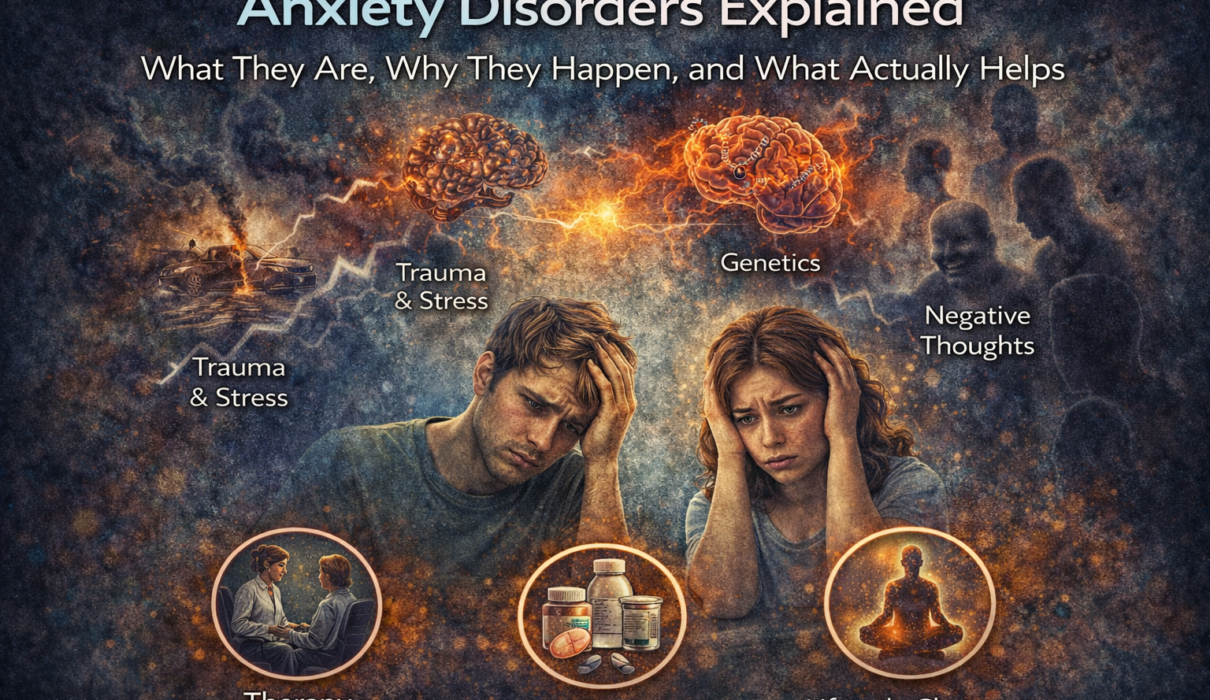
Anxiety disorders do not have a single cause. They develop from an interaction of biological, psychological, and environmental factors that vary significantly from person to person.
Genetics and Biology
Anxiety disorders run in families, and twin studies suggest a meaningful heritable component. This does not mean anxiety is simply genetic destiny — heritability reflects predisposition, not certainty. But it does mean that some people are born with a nervous system that is more reactive to perceived threat, with a lower threshold for activating the stress response and a harder time returning to baseline once activated (Hettema et al., 2001).
At a neurobiological level, anxiety disorders involve dysregulation in brain circuits connecting the amygdala, the brain’s threat-detection center, with the prefrontal cortex, which is responsible for rational assessment and emotional regulation. In anxiety disorders, the amygdala tends to be hyperreactive, and the prefrontal cortex’s ability to modulate that reactivity is impaired. Neurotransmitter systems including serotonin, GABA, and norepinephrine are all involved in this circuitry and are the targets of the most commonly used anxiety medications (Ressler and Mayberg, 2007).
Early Life Experiences
Adverse childhood experiences, trauma, early loss, chronic stress, and unpredictable environments during development all increase the risk of anxiety disorders in adulthood. These experiences shape how the nervous system learns to calibrate threat, often resulting in a system that remains on high alert long after the original stressors are gone (Shonkoff et al., 2012).
Attachment patterns and early relational experiences also influence anxiety. Children who grow up in environments where safety and support are inconsistent may develop anxiety patterns that persist into adulthood as a learned response to an unpredictable world.
Personality and Cognitive Patterns
Certain personality traits — particularly high neuroticism, behavioral inhibition, and a tendency toward negative interpretation of ambiguous situations — are associated with elevated anxiety risk. These traits are partly temperamental, meaning they appear early in life, and partly shaped by experience.
Cognitive patterns also play a significant role. People who habitually overestimate threat, underestimate their ability to cope, engage in excessive worry as a way of feeling prepared, or use avoidance as a primary coping strategy are more vulnerable to developing and maintaining anxiety disorders. These patterns are not character flaws. They are learned ways of relating to uncertainty that made sense at some point and became habitual.
Life Events and Stress
Major life stressors — job loss, relationship breakdown, health crises, financial pressure, grief, significant life transitions — can trigger the onset of anxiety disorders in people who are predisposed. Chronic, ongoing stress without adequate recovery is particularly potent in this regard.
The COVID-19 pandemic produced a documented increase in anxiety disorders across the United States, illustrating how widespread environmental stressors can shift population-level mental health (Ettman et al., 2020).
The Major Anxiety Disorders
The Diagnostic and Statistical Manual of Mental Disorders, Fifth Edition (DSM-5), which is the standard diagnostic reference used by American mental health professionals, classifies several distinct anxiety disorders. Each has its own specific features, though they share the common thread of excessive, functionally impairing fear or worry.
Generalized Anxiety Disorder
Generalized anxiety disorder, or GAD, is characterized by persistent, excessive worry about a wide range of everyday topics — health, finances, work, family, relationships, world events — that is difficult to control and occurs more days than not for at least six months. People with GAD often describe feeling chronically on edge, easily fatigued, and unable to quiet their minds. Physical symptoms including muscle tension, headaches, and sleep disturbance are common.
GAD is one of the most prevalent anxiety disorders in the United States, affecting approximately 6.8 million American adults (ADAA, 2023). It is the anxiety disorder that most closely resembles what people mean when they describe themselves as chronic worriers, but the clinical presentation involves a level of distress and impairment that goes significantly beyond normal concern.
Panic Disorder
Panic disorder is defined by recurrent unexpected panic attacks — sudden surges of intense fear that peak within minutes and involve physical symptoms including racing heart, shortness of breath, chest pain, dizziness, tingling sensations, and an overwhelming sense of impending doom or loss of control. The attacks feel genuinely life-threatening to the person experiencing them and are frequently mistaken for heart attacks, particularly when they occur for the first time.
What distinguishes panic disorder from isolated panic attacks is the persistent concern about having more attacks, the worry about their implications, and significant behavioral changes made to avoid situations where attacks might occur. Panic disorder affects approximately 6 million American adults and is twice as common in women as in men (NIMH, 2023).
Social Anxiety Disorder
Social anxiety disorder, also called social phobia, involves intense fear of social situations in which the person might be scrutinized, judged, or embarrassed. This goes well beyond introversion or shyness. People with social anxiety disorder experience significant distress in social interactions, often anticipate them with dread for days or weeks beforehand, and may avoid them entirely at significant cost to their personal and professional lives.
Common feared situations include public speaking, eating in front of others, meeting new people, and any context where performance might be evaluated. Social anxiety disorder is one of the most common mental health conditions in the United States, affecting an estimated 15 million adults, and it typically begins in the mid-teens (ADAA, 2023).
Specific Phobias
Specific phobias involve intense, irrational fear of a particular object or situation — heights, flying, needles, blood, certain animals, enclosed spaces — that is disproportionate to any actual danger and leads to avoidance. While specific phobias are the most common anxiety disorder overall, many people manage them without significant functional impairment by simply avoiding the feared stimulus. They become clinically significant when avoidance interferes meaningfully with daily life or causes significant distress.
Separation Anxiety Disorder
While commonly thought of as a childhood condition, separation anxiety disorder can persist into or develop in adulthood. It involves excessive fear or anxiety about separation from attachment figures — typically close family members or partners — and can significantly impair functioning.
Agoraphobia
Agoraphobia involves fear and avoidance of situations in which escape might be difficult or help unavailable if something goes wrong — open spaces, public transportation, crowds, being outside alone. It frequently develops as a complication of panic disorder, as people begin avoiding situations where they have had or fear having panic attacks, but it can also occur independently.
How Anxiety Disorders Are Diagnosed in the United States
Anxiety disorders are diagnosed by licensed mental health professionals, including psychiatrists, psychologists, and licensed clinical social workers, and by primary care physicians who are often the first point of contact for people experiencing anxiety symptoms.
Diagnosis involves a clinical interview exploring the nature, duration, and severity of symptoms, their impact on functioning, and ruling out medical causes. There is no blood test or brain scan that diagnoses an anxiety disorder. Diagnosis is clinical, based on the symptom picture and its fit with established diagnostic criteria from the DSM-5.
An important part of the diagnostic process in the US is ruling out medical conditions that can produce anxiety-like symptoms. Hyperthyroidism, cardiac arrhythmias, hypoglycemia, caffeine excess, certain medications, and substance withdrawal can all produce anxiety symptoms that need to be distinguished from a primary anxiety disorder. A thorough medical history and targeted physical workup are part of responsible evaluation.
Standardized questionnaires are commonly used alongside clinical interviews to quantify symptom severity. The Generalized Anxiety Disorder 7-item scale, known as the GAD-7, is one of the most widely used screening and monitoring tools in American primary care and mental health settings.
What Actually Works: The Evidence on Treatment
Anxiety disorders are among the most treatable mental health conditions. The evidence base for effective treatment is robust, and the majority of people who receive appropriate treatment experience meaningful improvement.
Psychotherapy
Cognitive behavioral therapy, or CBT, is the most extensively researched and consistently effective psychological treatment for anxiety disorders. CBT works by identifying and modifying the thought patterns and behavioral responses that maintain anxiety, particularly the overestimation of threat, the underestimation of coping ability, and the use of avoidance that prevents the person from learning that feared situations are manageable.
A core component of CBT for anxiety is exposure therapy — the gradual, systematic confrontation of feared situations or stimuli in a controlled way that allows the nervous system to learn that the feared outcome does not occur, or that it is manageable if it does. This process, called habituation or inhibitory learning depending on the theoretical framework, is the most powerful mechanism for reducing anxiety in specific phobias, panic disorder, social anxiety, and PTSD (Craske et al., 2014).
Acceptance and commitment therapy, or ACT, is another evidence-based approach that focuses less on changing anxious thoughts and more on changing the relationship to them — developing psychological flexibility and the ability to pursue valued activities despite the presence of anxiety rather than waiting until anxiety resolves.
In the United States, CBT is delivered by licensed psychologists, licensed clinical social workers, and licensed professional counselors, either in traditional weekly sessions or increasingly through telehealth platforms that have made it more accessible across the country.
Medication
Several classes of medication have demonstrated effectiveness for anxiety disorders and are widely used in American clinical practice.
Selective serotonin reuptake inhibitors, or SSRIs, are the first-line pharmacological treatment for most anxiety disorders. Medications including sertraline (Zoloft), escitalopram (Lexapro), fluoxetine (Prozac), and paroxetine (Paxil) are commonly prescribed. SSRIs work by increasing serotonin availability in brain synapses and require several weeks of consistent use before their full therapeutic effect is realized. They are not habit-forming and are safe for long-term use when prescribed and monitored appropriately.
Serotonin-norepinephrine reuptake inhibitors, or SNRIs, including venlafaxine (Effexor) and duloxetine (Cymbalta), are also first-line options for several anxiety disorders and work through a similar but broader mechanism.
Buspirone is a non-habit-forming anxiolytic medication specifically indicated for GAD. It is less sedating than benzodiazepines and works over weeks rather than immediately, making it better suited for chronic anxiety management than acute relief.
Benzodiazepines including lorazepam (Ativan), alprazolam (Xanax), and clonazepam (Klonopin) provide rapid anxiety relief and are sometimes used for short-term management of acute anxiety or panic. However, they carry significant risks of physical dependence, tolerance, and withdrawal with regular use, and their long-term use for anxiety disorders is generally not recommended by American psychiatric guidelines except in specific circumstances (Bandelow et al., 2017).
Beta-blockers such as propranolol are sometimes used situationally for performance anxiety, reducing the physical symptoms of anxiety like racing heart and tremor without affecting the cognitive experience of anxiety.
Combination Treatment
For moderate to severe anxiety disorders, research consistently shows that the combination of psychotherapy and medication produces better outcomes than either alone. In the United States, this is often delivered through a collaborative care model in which a prescribing physician manages medication while a therapist provides CBT or another evidence-based psychotherapy.
Lifestyle Factors
Several lifestyle factors have meaningful, evidence-supported effects on anxiety. Regular aerobic exercise has been shown in multiple studies to reduce anxiety symptoms through mechanisms involving endorphin release, reduced cortisol reactivity, and neuroplasticity. Sleep quality has a bidirectional relationship with anxiety — poor sleep worsens anxiety and anxiety disrupts sleep, meaning addressing both simultaneously is important.
Caffeine, while widely consumed in the US, is a stimulant that increases physiological arousal and can worsen anxiety symptoms, particularly in people with panic disorder and GAD. Reducing caffeine intake is a simple and often underutilized behavioral intervention.
Mindfulness-based practices including mindfulness-based stress reduction, or MBSR, have a growing evidence base for reducing anxiety, particularly through their effects on the ability to observe anxious thoughts without automatically acting on them.
When to Seek Help
If anxiety is interfering with your work, relationships, sleep, or daily activities on a regular basis, it is worth talking to a healthcare provider. This is true regardless of whether you think your anxiety is bad enough to warrant help. The threshold for seeking evaluation is functional impairment, not severity alone.
In the United States, starting with your primary care physician is often the most accessible first step, both for ruling out medical causes and for initiating treatment or getting a referral to a mental health specialist. Telehealth platforms have significantly expanded access to both therapy and psychiatric medication management in recent years, reducing some of the traditional barriers of geography, wait times, and cost.
If you are experiencing a mental health crisis or feel you may harm yourself or others, contact the 988 Suicide and Crisis Lifeline by calling or texting 988. This service is available 24 hours a day, seven days a week, and is free and confidential.
Frequently Asked Questions
Q: Is anxiety a mental illness or just a personality trait? Anxiety disorders are recognized mental health conditions with a clear evidence base for biological, psychological, and environmental contributors. Everyday anxious tendencies exist on a spectrum with clinical anxiety disorders. The distinction is functional impairment — when anxiety significantly interferes with daily life, it has moved from a personality tendency into clinical territory that responds to treatment.
Q: Can anxiety disorders go away on their own without treatment? Some people experience periods of remission in anxiety symptoms, particularly when major stressors resolve. However, untreated anxiety disorders tend to be chronic and recurrent. Without treatment, avoidance behaviors typically worsen over time as the person’s world gradually narrows to accommodate their anxiety. Evidence-based treatment, particularly CBT, produces durable improvements that persist after treatment ends.
Q: Is medication or therapy better for anxiety? Both are effective. For mild to moderate anxiety, CBT alone is often sufficient. For moderate to severe anxiety, the combination of CBT and medication typically produces the best outcomes. Medication without therapy tends to work as long as the medication is taken but does not teach the skills that produce lasting change. The right approach depends on the individual, the specific disorder, and practical considerations including access and preference.
Q: How long does treatment for anxiety take? CBT for anxiety typically involves 12 to 20 weekly sessions, though some people experience significant improvement more quickly. Medication generally requires 4 to 6 weeks to reach full therapeutic effect. Most people with anxiety disorders experience meaningful improvement within a few months of starting appropriate treatment, though some require longer or ongoing management for more chronic presentations.
Q: Can children and teenagers have anxiety disorders? Yes. Anxiety disorders are among the most common mental health conditions in children and adolescents in the United States. Separation anxiety disorder, specific phobias, and social anxiety disorder frequently begin in childhood or early adolescence. GAD and panic disorder can also begin in the teen years. Early identification and treatment are important because untreated anxiety in young people can significantly affect academic performance, social development, and long-term mental health.
Disclaimer:This article is for educational purposes only and does not constitute medical advice. Always consult a qualified healthcare professional for personal mental health concerns. If you are experiencing a mental health crisis, call or text 988 to reach the Suicide and Crisis Lifeline.
References
American Psychiatric Association. Diagnostic and Statistical Manual of Mental Disorders, Fifth Edition, Text Revision (DSM-5-TR). Washington, DC: APA; 2022. https://www.psychiatry.org/psychiatrists/practice/dsm
Anxiety and Depression Association of America (ADAA). Facts and Statistics. 2023. https://adaa.org/understanding-anxiety/facts-statistics
National Institute of Mental Health (NIMH). Anxiety Disorders. 2023. https://www.nimh.nih.gov/health/topics/anxiety-disorders
Hettema JM, Neale MC, Kendler KS. A review and meta-analysis of the genetic epidemiology of anxiety disorders. Am J Psychiatry. 2001;158(10):1568–1578. https://pubmed.ncbi.nlm.nih.gov/11578982
Ressler KJ, Mayberg HS. Targeting abnormal neural circuits in mood and anxiety disorders. Nat Neurosci. 2007;10(9):1116–1124. https://pubmed.ncbi.nlm.nih.gov/17726478
McEwen BS. Physiology and neurobiology of stress and adaptation. Physiol Rev. 2007;87(3):873–904. https://pubmed.ncbi.nlm.nih.gov/17615391
Craske MG, Treanor M, Conway CC, Zbozinek T, Vervliet B. Maximizing exposure therapy: an inhibitory learning approach. Behav Res Ther. 2014;58:10–23. https://pubmed.ncbi.nlm.nih.gov/24864005
Bandelow B, Michaelis S, Wedekind D. Treatment of anxiety disorders. Dialogues Clin Neurosci. 2017;19(2):93–107. https://pubmed.ncbi.nlm.nih.gov/28867934
Ettman CK, Abdalla SM, Cohen GH, Sampson L, Vivier PM, Galea S. Prevalence of depression symptoms in US adults before and during the COVID-19 pandemic. JAMA Netw Open. 2020;3(9):e2019686. https://pubmed.ncbi.nlm.nih.gov/32876685
Shonkoff JP, Garner AS; Committee on Psychosocial Aspects of Child and Family Health. The lifelong effects of early childhood adversity and toxic stress. Pediatrics. 2012;129(1):e232–246. https://pubmed.ncbi.nlm.nih.gov/22201156
1 Comment